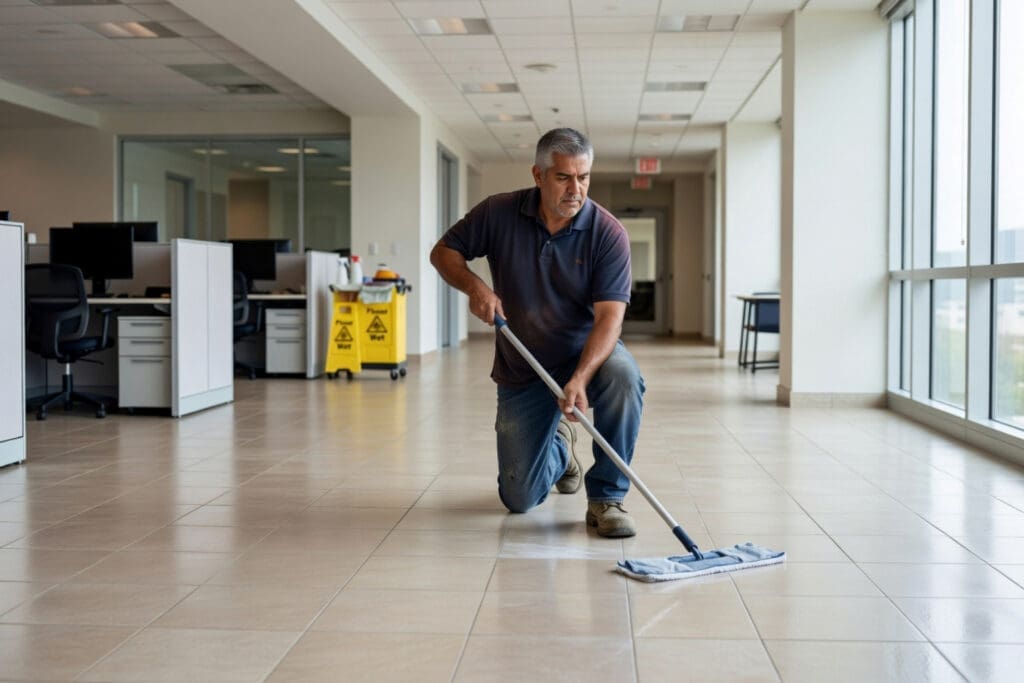
Cut Floor Replacement Costs by Up to 60 Percent with Professional Floor Stripping and Waxing
Waxing commercial tile floors is a professional facility service that removes failed finish, neutralizes the substrate, and applies multiple thin coats of protective wax to restore gloss, improve traction, and extend floor life in commercial, industrial, and institutional buildings.
| Step | Key Detail |
|---|---|
| Strip old wax | pH-calibrated solution, 10-15 min dwell time |
| Neutralize | Return floor to neutral pH before waxing |
| Apply wax | 3-6 thin coats, 30-45 min drying between each |
| Cure | Minimum 8 hours before foot traffic |
| Maintain | Quarterly burnishing extends finish life to 18 months |
For facility managers, dull, yellowed, or peeling tile creates three immediate problems. It weakens brand perception, increases slip-and-fall exposure, and accelerates capital replacement costs. In medical offices, manufacturing plants, schools, and professional service facilities, floor condition signals whether building standards are being managed with discipline.
The resolution is a building-specific strip and wax program completed by a trained in-house team with the right equipment, chemical controls, and traffic planning. Done correctly, a professional service can extend floor life by a decade or more and reduce long-term replacement costs by up to 60 percent.
I’m Dave Spinks, and after nearly three decades leading Office Keepers in Indianapolis as a family-owned facility maintenance partner, I have seen what separates a durable high-gloss finish from a costly re-do. In the sections ahead, I will show you what decision-makers need to know to protect flooring assets, reduce operational risk, and keep facilities presentation-ready.
Waxing commercial tile floors terms to learn:
Protect VCT and Terrazzo Assets While Reducing Slip Risk and Premature Wear
Facility leaders lose money when the wrong floor care method is applied to the wrong surface. Poor substrate selection leads to finish failure, avoidable slip hazards, and unnecessary replacement costs. In high-traffic commercial and institutional environments, that also affects how employees, visitors, and clients judge the condition of the building.
The solution starts with identifying which surfaces actually benefit from a sacrificial floor finish. Vinyl Composition Tile (VCT), linoleum, and terrazzo are the primary candidates because they are porous and need protection from dirt intrusion, moisture, staining, and wear. In contrast, applying wax to non-porous ceramic or porcelain tile often causes adhesion failure, peeling, and ongoing maintenance issues. In those cases, professional grout cleaning services are often the better path to restoration.
For facility managers in Indianapolis, Carmel, Fishers, and surrounding markets, waxing commercial tile floors is not just about appearance. A properly maintained finish improves traction and supports safer traffic flow, which is critical for enhancing safety and reducing liability for your Indiana business. The operational benefit is clear. You protect employees and visitors while preserving the professional image of the building.
At Office Keepers, our in-house team builds floor care plans around each facility’s traffic patterns, substrate mix, and risk profile. That building-specific approach comes from a family-owned company with local roots dating back to 1978 and leadership shaped by nearly thirty years of hands-on facility experience. When the right surfaces are treated with the right process, VCT floors can last a decade longer and replacement costs can drop by up to 60 percent.
Increase Finish Durability with High-Solids Floor Care Systems and Controlled Application Protocols
When floor finish fails early, the impact is immediate. Facilities lose shine, traffic lanes show wear, and brand perception drops fast in spaces where presentation and safety matter. In medical, education, industrial, and office environments, the real issue is not just appearance. It is whether the service plan was built for the traffic load, chemical exposure, and operational demands of the building.
The resolution is a professional system that matches finish chemistry, environmental conditions, and application methods to the actual use of the facility. That is why waxing commercial tile floors must be managed by trained technicians using commercial-grade equipment and building-specific planning, not generic janitorial routines.
The durability of the finish is heavily influenced by solids content. In commercial floor care, an 18 percent solids wax may perform adequately in a low-traffic administrative area. High-traffic healthcare corridors, retail entries, and school hallways usually require a 25 percent high-solids formula for stronger resistance to scuffs, heel marks, and chemical exposure.
| Wax Type | Solids Content | Best Use Case | Durability Level |
|---|---|---|---|
| Standard | 18% | Low-traffic offices | Moderate |
| High-Solids | 25% | Hospitals, Schools, Retail | Superior |
High-solids finishes create a thicker, more resilient protective layer with fewer coats. That improves lifecycle value and reduces the frequency of restoration. For busy facility managers in Greenwood and Noblesville, that means less disruption and better long-term budget control.
Environmental control is just as important. Forced drying with heaters or improperly directed fans can cause micro-fissures that lead to peeling. High humidity can trap moisture and interfere with curing. For best results, floor surface temperature should remain between 65 and 75 degrees Fahrenheit so the finish can bond correctly and deliver a clear, durable result. If you are looking for a floor stripping company that won’t leave you dull, this level of technical discipline is a key benchmark.
Reduce Rework and Adhesion Failure with a Controlled Stripping and Neutralization Process
Most finish failures begin in the stripping phase. If old finish is not fully removed, or if alkaline residue is left behind, the new coating will not bond properly. The result is haze, peeling, uneven gloss, and a shorter service life that wastes both labor and budget.
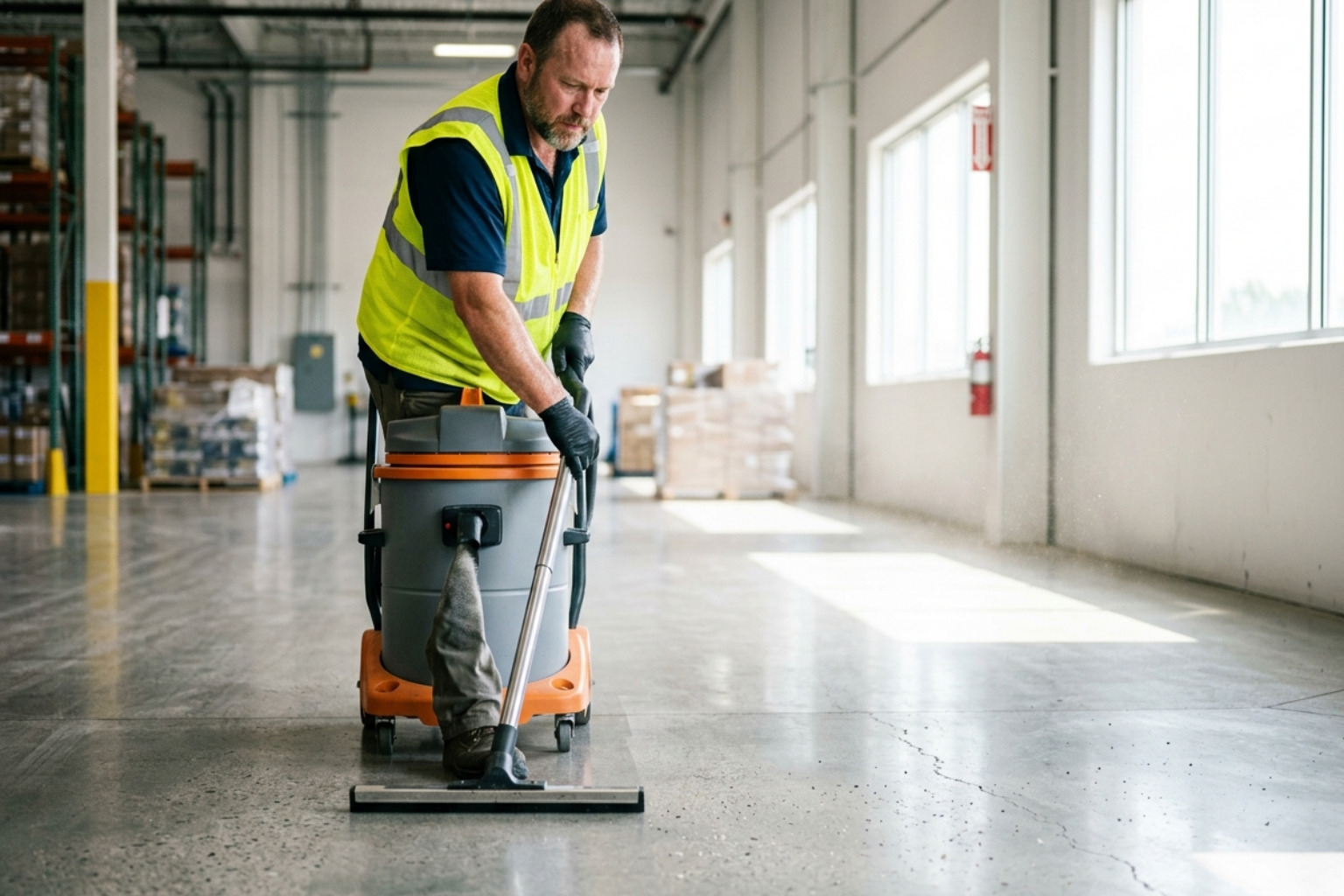
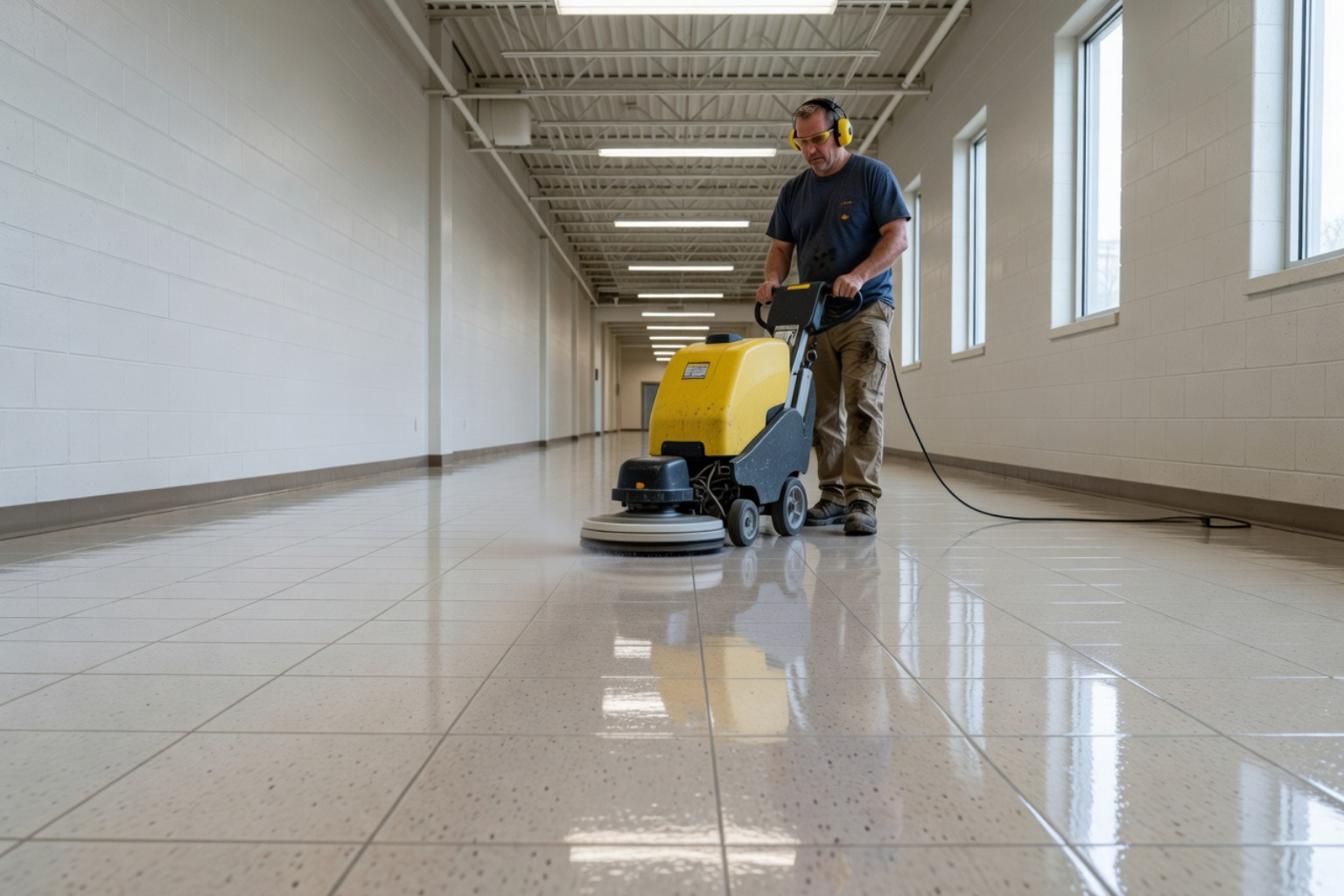
The fix is a controlled process managed by an in-house team using the right dwell times, agitation equipment, slurry extraction, and neutralization standards for the specific building. A pH-calibrated stripping solution must dwell for 10 to 15 minutes to liquefy old finish, but it must never dry on the floor. After that, a 175 RPM floor machine with a weighted plate provides the pressure needed to break down buildup, and a high-powered wet-dry vacuum removes the slurry before it can interfere with the next stage.
This is the secret to cleaning old vinyl composition tile like the pros. Complete slurry removal and full neutralization are what separate a durable commercial result from a short-lived finish. Once the floor is returned to a neutral pH, new finish can be applied evenly in a figure-8 pattern to reduce streaking and maintain visual consistency across the space.
At Office Keepers, this work is performed by our own background-checked employees, not subcontractors. That consistency matters. It is one reason local facilities have trusted our family-owned company for decades and why nearly thirty years of leadership experience still shapes how we protect commercial flooring assets today.
_compressed.webp?alt=media&token=56bdfbc0-06b1-4947-a605-417d39310c5c "user-inserted")
Prevent Edge Buildup, OSHA Exposure, and Finish Failure with Professional Work Zone Controls
Poor execution creates visible and financial problems quickly. Edge buildup near walls and baseboards produces an uneven appearance and premature discoloration. Weak work zone controls expose facilities to slips, chemical contact, and avoidable compliance issues. In active commercial buildings, those mistakes can disrupt operations and damage confidence in the maintenance program.
The solution is disciplined application and site control by a trained in-house crew. Thin, even coats reduce buildup, and adjusting edge coverage from coat to coat prevents heavy accumulation where traffic is minimal. That keeps the finish looking uniform across the full floor plate instead of creating dark borders along the perimeter.
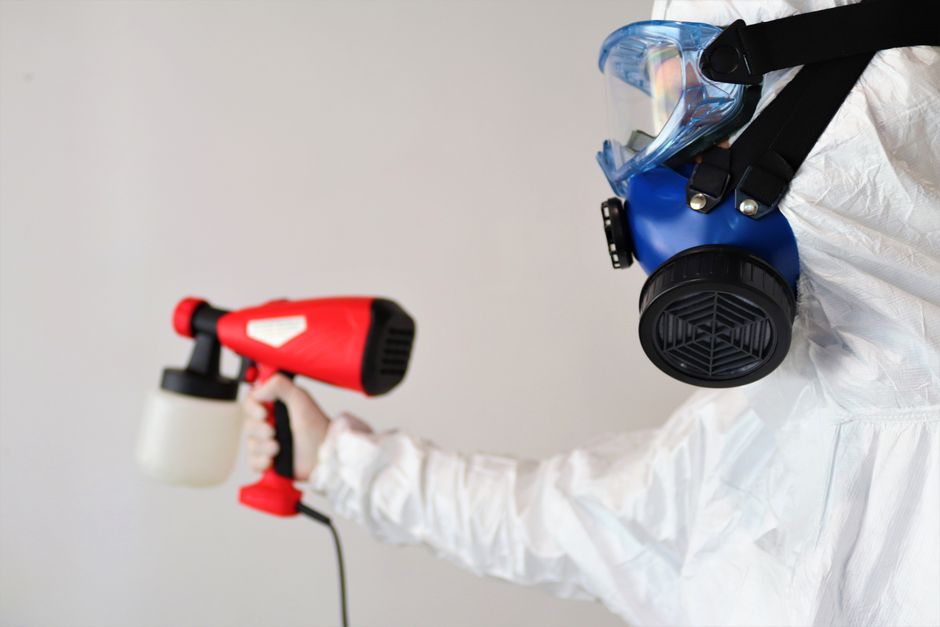
Safety controls are equally critical. Floor stripping chemicals require chemical-resistant gloves, splash goggles, non-slip footwear, proper ventilation, and clearly marked work zones. High-visibility wet floor signs and caution tape help maintain OSHA compliance and reduce injury risk in facilities across Westfield, Zionsville, and the greater Indianapolis market.
For facility decision-makers, this is where provider stability matters. A family-owned partner with long-standing local operations and nearly thirty years of leadership experience is better positioned to deliver repeatable quality than rotating subcontractor models. Building-specific planning, trained in-house labor, and disciplined safety controls are what protect both the floor and the operation.
Extend Finish Life to 18 Months with a Planned Maintenance Matrix for High-Traffic Facilities
A fresh finish loses value quickly when there is no maintenance plan behind it. The result is early dulling, visible traffic lanes, lower employee confidence in the workspace, and a weaker first impression for clients and visitors. For facility managers, the issue is not whether the floor looked good on day one. It is whether the finish will hold up under real operational conditions.
The solution is a building-specific maintenance matrix managed by a professional team that understands traffic levels, soil load, entry conditions, and usage patterns. Daily dust removal protects the finish from abrasive grit. Weekly damp mopping with a pH-neutral cleaner removes soil without degrading the protective layer. Quarterly high-speed burnishing restores gloss and hardens the top surface so the finish lasts longer under load.
A standard floor machine runs at 175 RPM, but a high-speed burnisher operates at 1500 RPM or more. That speed generates the friction needed to smooth microscopic scratches and restore a cleaner, sharper appearance. In commercial settings, that is one of the most effective ways to delay a full restoration cycle.
By following a regular commercial floor cleaning schedule that includes burnishing, facilities can often extend the time between full strip-and-wax services from six months to as long as 18 months. That reduces budget pressure, limits disruption, and keeps public-facing spaces aligned with the standards expected in professional environments. High-performance walk-off mats at entrances also help reduce soil transfer before it reaches the floor.
This kind of consistency does not happen by accident. It comes from a stable in-house team, a family-owned service model, and local operating experience built over decades. That is how Office Keepers helps facility leaders preserve floor assets while reducing the burden of day-to-day maintenance decisions.
Frequently Asked Questions about Commercial Floor Care
How often should my facility undergo a full strip and wax?
The frequency depends entirely on foot traffic and your maintenance routine. High-traffic environments like hospitals, schools, or retail centers in Indianapolis usually require a full service every 3 to 6 months. Standard office buildings or professional firms can typically maintain their floors with an annual service, provided they follow a consistent quarterly burnishing schedule to keep the sacrificial layer intact.
What is the benefit of hiring a professional team over using in-house staff?
Professional teams use industrial-grade equipment that most in-house janitorial closets don’t have. For example, automatic scrubbers with weighted plates can cut labor time by 40 percent while providing a much deeper clean. Furthermore, professional providers like Office Keepers use a dedicated team of in-house, background-checked employees. This ensures a level of consistency and accountability that protects your facility investment and ensures the job is done right the first time without disrupting your daily operations.
How long must the floor cure before resuming foot traffic?
This is the most common question we get. While the wax may feel dry to the touch within 30 to 45 minutes, it is not yet “cured.” We recommend a minimum of 8 hours of curing time before allowing light foot traffic. For heavy equipment, moving furniture, or high-volume traffic, a 24 to 48 hour curing window is best. Walking on the floor too soon can cause permanent scuffing or “tracking” that cannot be buffed out.
Discuss Waxing Commercial Tile Floors with a Local In-House Team during a Facility Walkthrough
For facility leaders, floor problems rarely stay isolated to the floor. They affect safety, staff confidence, visitor perception, and the time your team must spend managing avoidable maintenance issues. When a provider cuts corners or relies on inconsistent labor, the burden lands back on operations.
Office Keepers exists to remove that burden. Since 1978, our family-owned company has supported the Indianapolis business community with in-house facility maintenance services built for commercial, industrial, and institutional environments. Under Dave Spinks’ nearly thirty years of local leadership, we have focused on practical, building-specific plans that protect brand standards, support compliance, and keep facilities running smoothly.
Our approach to floor stripping and waxing is straightforward. We evaluate the substrate, traffic level, operational schedule, and risk profile of your building, then assign trained, background-checked employees to execute the work consistently. We do not use subcontractors. That means stronger accountability, more stable service quality, and less follow-up for your team.
Whether you manage a medical center in Carmel, an industrial plant in Noblesville, or a multi-tenant office in Indianapolis, we can help you build a floor care plan that supports safety, appearance, and lifecycle value. The next step is not a generic quote request. It is a collaborative, facility-specific evaluation that lets you hand off this operational burden to a partner that knows the local market and understands what commercial buildings require.
Contact Office Keepers to schedule that strategy session and put your floor maintenance plan on a more reliable footing.