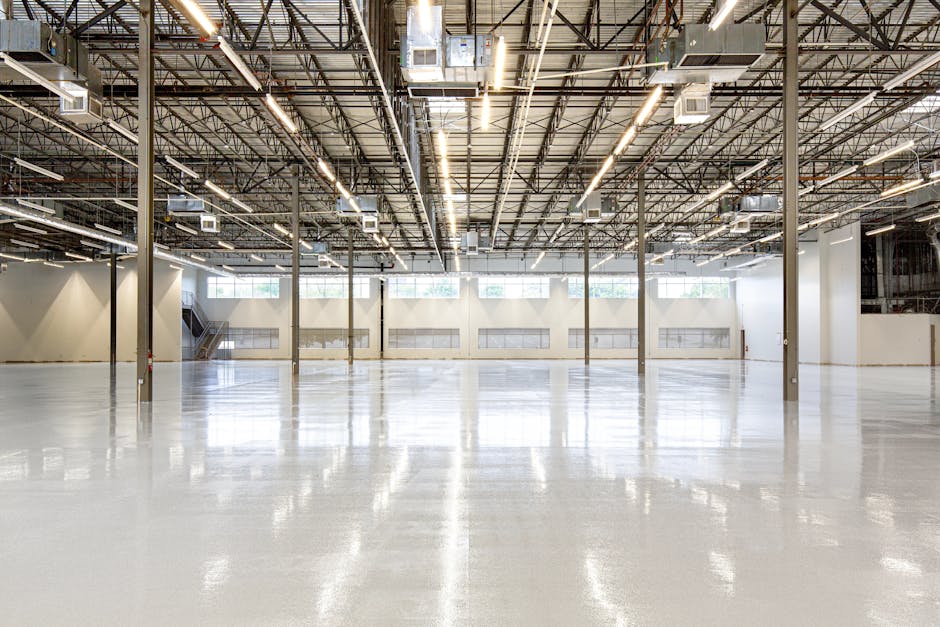
Securing Long-Term Asset Value through High-Performance Floor Protection
Finish floor wax is a protective coating applied to hard commercial floors to guard against scuffs, moisture, and heavy foot traffic while restoring a clean, professional appearance.
Here is what facility managers need to know at a glance:
| Factor | Key Detail |
|---|---|
| Best surfaces | VCT, linoleum, terrazzo, concrete, rubber tile |
| Solids content | 16-25% (higher = more durable) |
| Coverage per gallon | 1,500-2,200 sq ft per coat |
| Coats needed | 3-5 coats on a stripped floor |
| Recoat time | 30 minutes to 3 hours between coats |
| Full strip frequency | Every 6-12 months for most commercial floors |
| Slip resistance standard | ASTM D2047 (0.5 minimum coefficient of friction) |
Most commercial floors fail not because of heavy use, but because the wrong product was applied, or the right product was applied incorrectly. A dull, scuffed floor is not just an aesthetic problem. It signals neglect to clients, creates slip hazards for staff, and accelerates the wear on a flooring asset that costs thousands of dollars to replace.
This guide breaks down everything a facility or operations manager needs to make the right call on floor protection.
I’m Dave Spinks, and after nearly three decades managing commercial facility operations across Indianapolis, I have seen how the right finish floor wax program transforms a building’s safety profile and professional image. That experience is the foundation of everything you will find in this guide.
Key terms for finish floor wax:
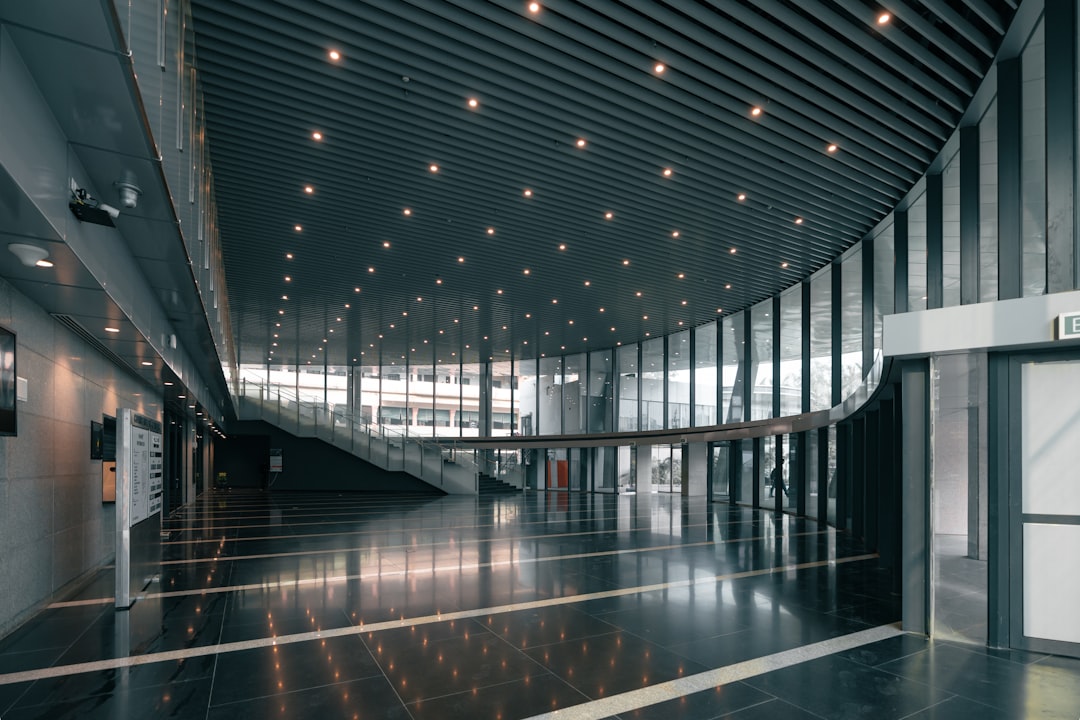
When we walk into a medical center in Carmel or an industrial plant in Noblesville, the first thing we notice is the floor. It is the largest surface area in your facility and the one that takes the most punishment. A high-performance finish floor wax serves as a sacrificial barrier. It is designed to take the scratches, spills, and impact of heavy foot traffic so your actual flooring material does not have to.
Without this protection, dirt and grit act like sandpaper, grinding away at the surface of your VCT or stone. Over time, this creates permanent “traffic lanes” that no amount of mopping can fix. By maintaining a consistent finish, we are essentially extending the life of your flooring by decades. This is not just about a “shiny floor” – it is about protecting a capital asset and ensuring your facility image reflects the quality of your brand.
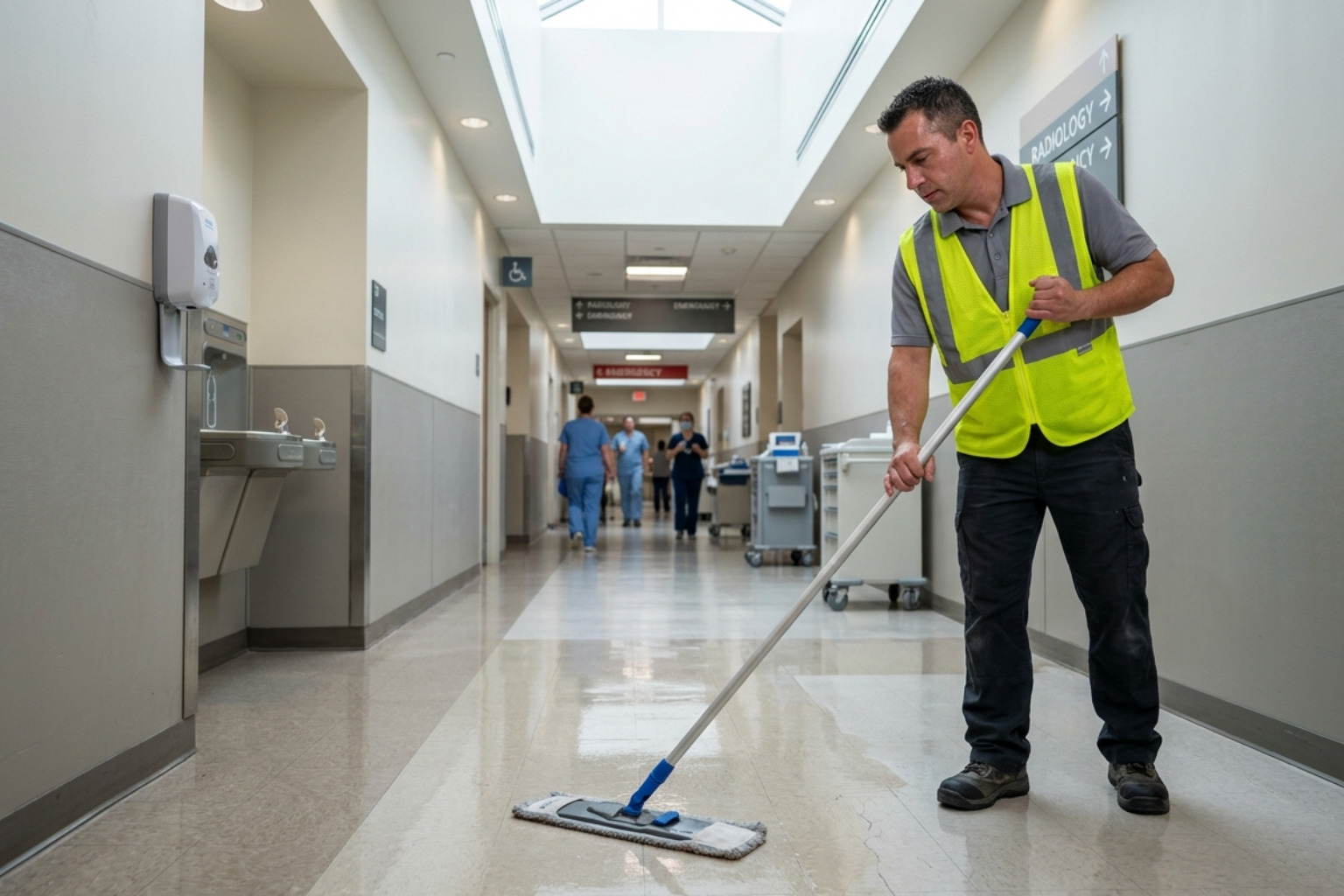
Maximizing Durability by Selecting Advanced Synthetic Polymers over Outdated Wax Methods
In the modern commercial world, the term “wax” is often used as a catch-all, but there is a significant technical difference between traditional floor wax and modern floor finish. Understanding this distinction is the first step in choosing the right protection for your building.
Traditional floor wax, often made from natural carnauba, is a paste or liquid that requires mechanical buffing to achieve a shine. It is softer and needs frequent maintenance. Modern floor finishes, however, are engineered with synthetic polymers that dry to a hard, durable film. These products provide a “wet look” shine without the constant need for a buffing machine.
| Feature | Traditional Floor Wax | Modern Floor Finish |
|---|---|---|
| Composition | Natural Carnauba or Paraffin | Synthetic Acrylic Polymers |
| Durability | Soft, prone to scuffs | Hard, scratch-resistant |
| Application | Buffing required for shine | Dries bright and clear |
| Best Use | Wood, cork, some stone | VCT, Linoleum, Concrete |
| Maintenance | Frequent buffing/re-waxing | Periodic burnishing/scrubbing |
When we evaluate a facility, we look at the specific wear patterns. For high-traffic retail or educational spaces, a synthetic polymer finish is almost always superior because it resists black heel marks and detergent breakdown better than natural wax. To get the best results, you must start with a clean slate, which means using a commercial wax stripper that actually works to remove every trace of old, yellowed product.
Achieving Superior Slip Resistance and Visual Clarity on VCT and Stone Surfaces
The “solids content” of a finish floor wax refers to the amount of protective material left on the floor after the liquid evaporates. Most professional products range from 16% to 25% solids. A high-solids finish, like AcryliWax 25, offers 25% non-volatile solids. This means you can achieve a deeper gloss with fewer coats, saving time during the application process.
Visual clarity is measured by specular gloss, with premium products achieving a 95+ rating. However, we never sacrifice safety for shine. All the products we utilize must meet the ASTM D2047 standard for slip resistance, ensuring a minimum coefficient of friction of 0.5. This keeps your hallways safe for employees in Zionsville or patients in Fishers. If you are worried about your current floors looking hazy or feeling slippery, it might be time to pick a floor stripping company that wont leave you dull.
Preserving Structural Integrity with Non-Ambering Water-Based Formulas for Specialized Flooring
For specialized surfaces like light-colored maple wood or decorative concrete, the choice of finish is critical. Traditional oil-based products tend to “amber” or turn yellow over time, which can ruin the aesthetic of a modern office. We recommend self-crosslinking, water-based formulas for these areas. These products, such as Minwax Ultimate Floor Finish, dry clear and stay clear.
Water-based finishes also offer the benefit of low odor and fast drying times. In sensitive environments like medical clinics or schools, using a low-VOC or non-toxic option like Bioshield Wax Finish can be a game-changer. These products use carnauba wax emulsions and alcohol esters to provide protection without the harsh chemical smells that can trigger sensitivities.
Eliminating Operational Downtime with Professional Grade Strip and Wax Protocols
The process of applying finish floor wax is a technical operation that requires precision. If you rush the stripping phase or skip the neutralizing step, the new finish will fail to adhere, leading to peeling or “flaking” within weeks. Our in-house teams follow a strict multi-step protocol to ensure the longest possible life for your floor.
- Stripping: We apply a high-strength stripper to liquefy old layers of wax and finish.
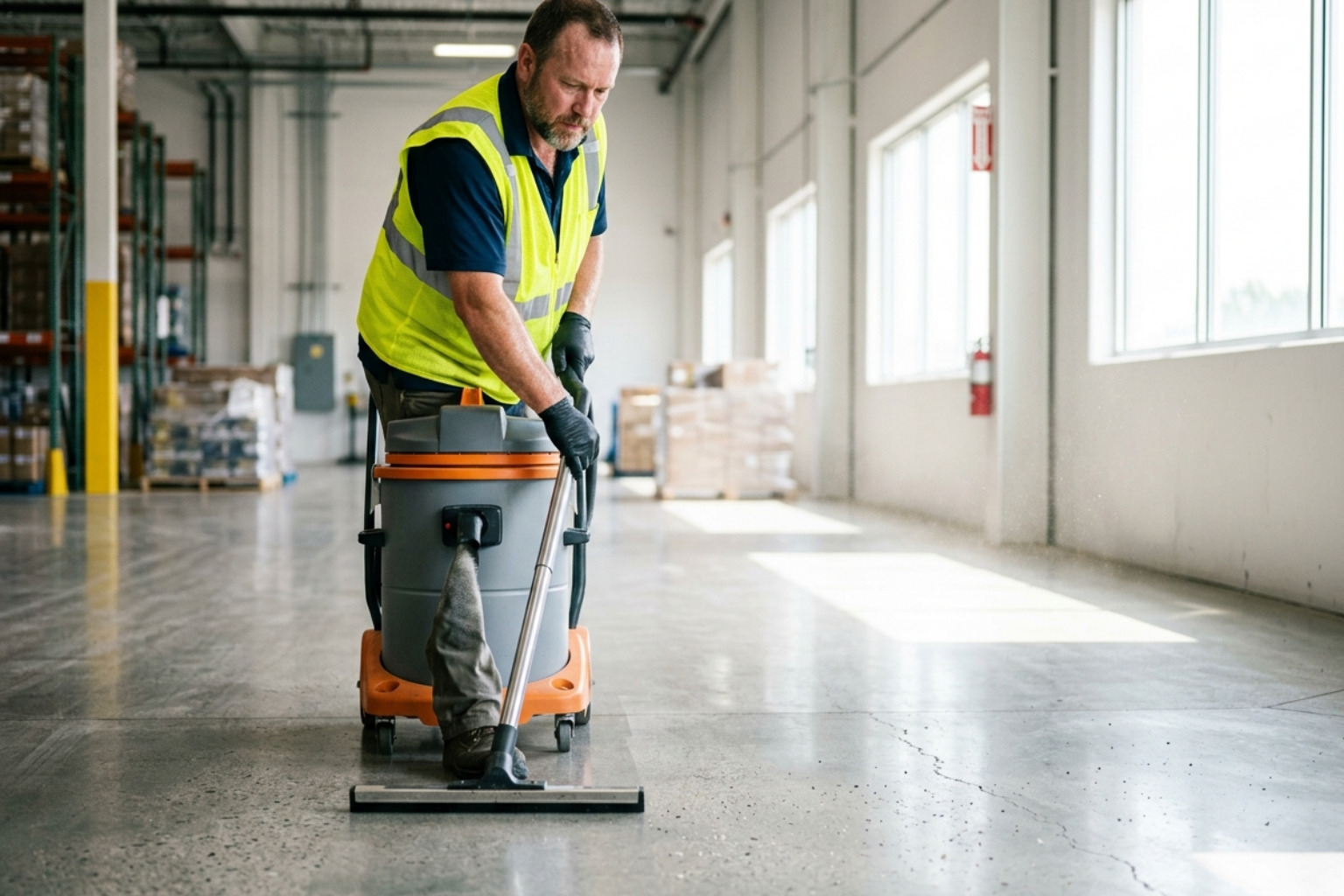
- Scrubbing: Using heavy-duty floor machines with aggressive pads, we agitate the surface to remove embedded dirt.
- Neutralizing: This is the most skipped step in the industry. We use a neutralizing solution to bring the floor’s pH back to a balanced level so the new finish can bond.
- Application: We apply thin, even coats of premium finish, allowing each layer to dry completely.
By scheduling these services after hours or during weekends in locations like Westfield or Greenwood, we ensure your business remains operational without interruption. For a deeper look at the technical side, you can explore our floor stripping waxing service details.
Ensuring Optimal Film Formation through Precise Environmental Control and Curing Management
Environmental factors play a massive role in how a floor finish performs. We monitor the temperature and humidity of every facility before we begin. The ideal application temperature is between 60 and 95 degrees Fahrenheit. If the floor is too cold, the finish may develop white spots or fail to level properly.
Drying times typically range from 30 to 40 minutes between coats, but this varies based on airflow and humidity. We never “force dry” a finish with high-powered fans directly on the wet surface, as this can cause ripples or uneven curing. A typical 3-5 coat application on a stripped floor needs at least 24 hours before it is ready for heavy foot traffic and up to 7 days before you should slide heavy furniture across it. Professional equipment is a must for this level of precision, which is why your business needs a commercial floor waxing machine operated by trained professionals.
Reducing Maintenance Costs with High-Solids Finishes Designed for Industrial Scale
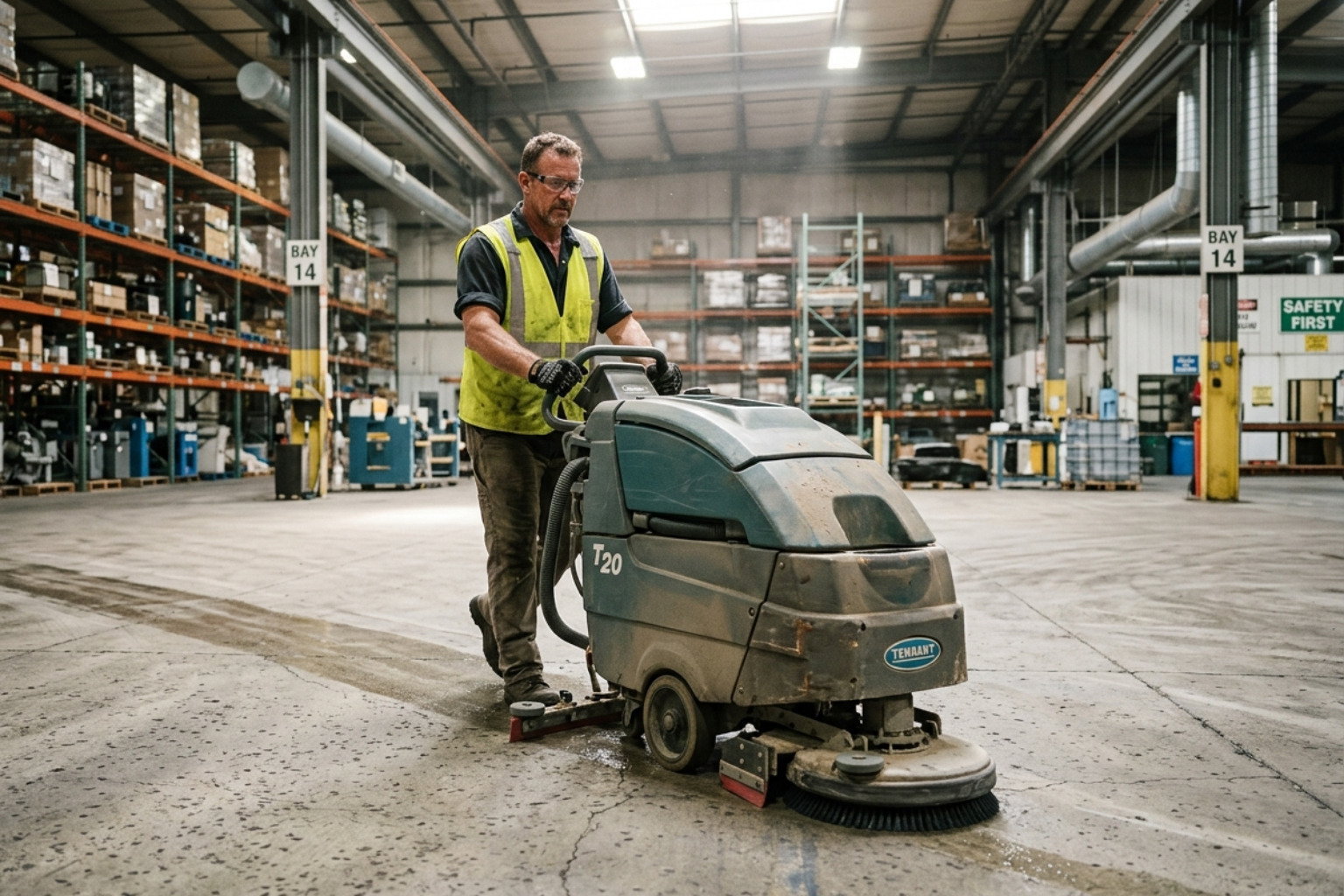
For industrial plants and large warehouses in Indianapolis, the cost per square foot is a major consideration. High-solids finishes are designed for these large-scale environments. While the initial product might cost more, the labor savings are significant. A finish with 25% solids content can provide the same protection in three coats that a 16% solids product provides in five.
Coverage rates are also a key metric. A gallon of premium finish like SureFinish or AcryliWax typically covers 1,500 to 2,000 square feet per coat. In an industrial setting, we often apply a “sacrificial wear coat” that can be easily refreshed without a full strip. This approach reduces the frequency of expensive restoration projects and keeps your commercial floor cleaning budget under control.
Mitigating Liability and Enhancing Safety Standards in High-Traffic Commercial Corridors
Safety is the number one priority for any facility manager. A worn-out, scuffed floor is more than just ugly – it is a liability. When the finish wears thin, the floor loses its slip-resistant properties, especially when wet. Regular maintenance, including spray buffing and high-speed burnishing, keeps the surface smooth and restores the coefficient of friction.
Burnishing uses a high-speed machine (1,500 to 3,000 RPM) to “heat” the top layer of finish, smoothing out microscopic scratches and restoring a mirror-like shine. This process not only looks great but also hardens the finish, making it more resistant to future scuffs. Proper maintenance is a critical component in how floor waxing enhances safety and reduces liability for your Indiana business.
Preventing Costly Surface Failures by Implementing Professional Leveling and Adhesion Standards
One of the most common issues we see in Indianapolis facilities is “white spots” or “powdering.” This usually happens when the finish is applied to a floor that is still damp or when the previous coat was not fully dry. Moisture gets trapped under the film, creating a cloudy appearance that can only be fixed by stripping the floor again.
Another issue is poor adhesion, where the finish peels off in sheets. This is often caused by residue from the stripping solution or using the wrong type of finish for the surface (for example, applying a standard VCT finish to marble or LVT). Professional leveling agents in products like Supreme Floor Finish ensure the liquid flows out evenly, preventing ridges or streaks. If your previous provider left you with these issues, it is time to learn how to pick a floor stripping company that wont leave you dull.
Resolving Common Facility Management Concerns Regarding Professional Floor Care
How often should commercial floors be stripped and waxed
Most commercial VCT or linoleum floors require a full strip and wax every 6 to 12 months. However, this depends entirely on your foot traffic and maintenance routine. A school hallway in Castleton will need more frequent care than a low-traffic office in Westfield. If the floor looks dull even after a deep scrub and burnish, the finish has likely worn through, and it is time for a full restoration.
What is the benefit of high-solids floor finish
The primary benefit is durability and labor efficiency. High-solids finishes (20-25%) leave more protective material on the floor per coat. This creates a tougher shield against black heel marks and scratches. For facility managers, this means you can go longer between full stripping cycles, which is the most labor-intensive part of floor care.
Are there eco-friendly floor wax options for medical facilities
Yes. Products like Bioshield Wax Finish are specifically designed for chemically sensitive environments. These water-based, low-odor options provide a natural luster without the heavy solvents found in traditional finishes. They are biodegradable and have zero VOC content, making them ideal for healthcare settings where air quality is a top concern.
Partnering with a Multi-Decade Indianapolis Expert to Guarantee Consistent Facility Excellence
At Office Keepers, we understand that your facility is more than just a building – it is a reflection of your commitment to excellence. Since 1978, we have served the Indianapolis business community by solving the most complex hygiene and safety challenges. We do not use subcontractors. Every member of our team is a background-checked, in-house employee who is trained in our specific high-performance protocols.
Whether you are managing a high-stakes medical center in Fishers or a manufacturing plant in Noblesville, we provide a level of accountability that national franchises simply cannot match. Our family-owned approach means we treat your facility like our own, prioritizing employee stability and long-term partnerships over quick fixes.
We invite you to transfer the burden of floor maintenance to us. Let’s start with a facility-specific evaluation to determine exactly what your floors need to stay safe, durable, and beautiful for years to come.